In the play Julius Caesar by William Shakespeare, Mark Anthony said: “I come to bury Caesar, not to praise him. The evil that men do lives after them.” Muhammadu Buhari, Nigeria’s former president, who died yesterday allegedly at 82, was no Caesar, despite rising to the rank of general in the Nigerian army. But his death prompted the usual overflowing of obsequies from the usual hypocrites, and attempts to silence any mention of the evil visited on Nigeria by the man, with claims about the need to respect the dead and the time not being right.
Martin Luther King Jr reminded us that: “The time is always right to do what is right”. What is right at this time is to tell the truth about Buhari’s evil and its legacy on Nigeria, in order to give the country a chance to learn from that sordid history and possibly avoid such mistakes in the future. At this point, sugar-coating what Buhari did is unpatriotic and serves the agenda of continuing Nigeria’s basket-case conditions, of which Buhari was a significant contributor.
A legacy of blood
Buhari’s legacy is soaked in the blood of innocents. His bloodlust was visible to even casual observers when he said in 2011 that if the (s)election in which he was a presidential candidate was rigged, “baboons and dogs will be soaked in blood”. It was hardly surprising when an estimated 500 Nigerians died in the ensuing violence following the results. Ayo Oritsejafor, then head of the Christian Association of Nigeria (CAN), called for Buhari to be arrested. This call wasn’t heeded by the authorities. A grave mistake.
Buhari would eventually succeed in his fourth attempt to become president in 2015. But his thirst for Nigerian blood wasn’t quenched. He came into office in May 2015 and by December soldiers raided the compound of Shia leader Ibrahim Zakzaky in Zaria, Kaduna State and massacred men, women and children, burying the victims in shallow graves. The official state government inquiry put the death toll at 350, but relatives of the victims claimed the deaths were up to 4,000.
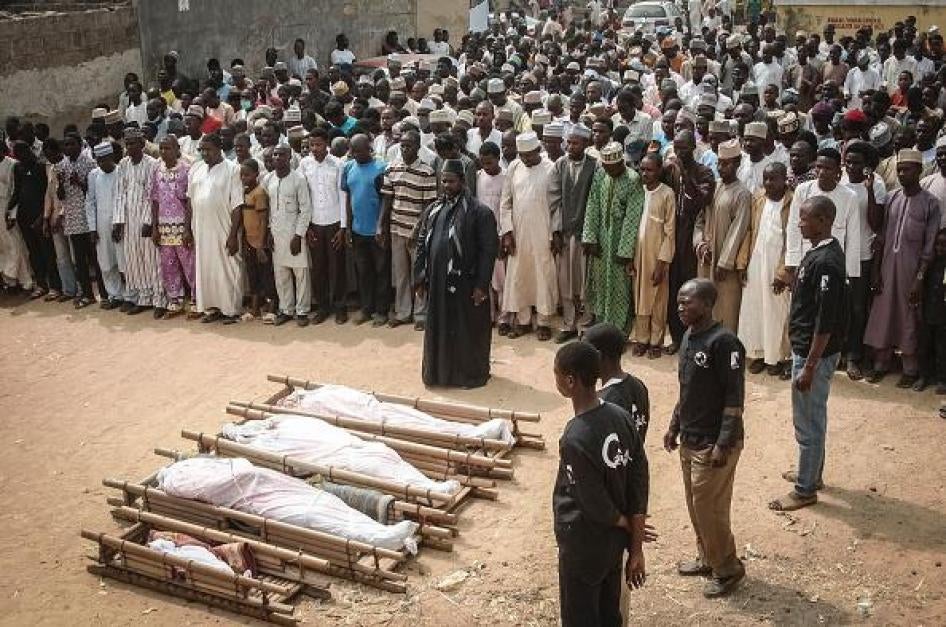
Some of the victims of the massacre of Shia Muslims in Zaria
Buhari went on Al Jazeera and defended the behaviour of the killers for “blocking the convoy” of army chief of staff Tukur Burutai. He challenged the interviewer asking if she expected the army chief to be a “sitting duck”. The army commander of the division that the murderous troops came from was promoted by Buhari.
Buhari’s “command responsibility” for the crimes of the security agencies
In the practice of international law, command responsibility (also superior responsibility) is the legal doctrine of hierarchical accountability for war crimes, whereby a commanding officer (military) and a superior officer (civil) are legally responsible for the war crimes and the crimes against humanity committed by his subordinates; thus, a commanding officer always is accountable for the acts of commission and the acts of omission of his soldiers.
The International Criminal Court still has an “ongoing” case in relation to the crime against humanity in the mass murder of Shia civilians. Another massacre under Buhari’s watch and under ICC investigation was the extrajudicial killings of 150 pro-Biafran agitators, as estimated by Amnesty International. When questioned on Al Jazeera about this, Buhari said “they shouldn’t joke with Nigerian security and Nigerian security will not tolerate this”.
Perhaps the worst memory of Buhari’s mass murders, probably because it happened in cosmopolitan Lagos and the victims were young Nigerians with access to social media, was the massacre of End SARS protesters by soldiers at Lekki Toll Gate on 20 October 2020. The Lagos State government inquiry into the shooting concluded that soldiers: “shot, injured and killed unarmed helpless and defenceless protesters, without provocation or justification, while they were waving the Nigerian Flag and singing the national anthem and the manner of assault and killing could in context be described as a massacre.”

Nigerians were warned about Buhari’s evil
It wasn’t like several Nigerians didn’t know that Buhari would be a disaster for the country before his second coming as president after his short stint as a military dictator in the 1980s. Current president Bola Tinubu, who contributed to inflicting Buhari on Nigerians, said in 2003 according Wikileaks cables that Buhari’s “ethnocentrism would jeopardize Nigeria’s national unity. Buhari and his ilk are agents of destabilization who would be far worse than Obasanjo”. Such “ethnocentrism” was visible in Buhari’s handling of the Fulani herdsmen crisis that led to the Fulani militia group – known to attack villages and towns that disrupt the business of cattle herding – being named in 2015 as the fourth most dangerous terror group by the Global Terrorism Index.
Nigerians that survived the terrorists in the military, the insecurity from Boko Haram and Fulani militants terror, all of which rose exponentially under Buhari, were then faced with misery inflicted by a government led by a man who, in all likelihood, never read a book in his life. Some called him “Baba Go Slow” for his indecisiveness, but “Daura Dullard” was most fitting. He was incurious, devoid of anything beyond rudimentary intellect, and still believed he had a God-given right to govern.
Only in Nigeria
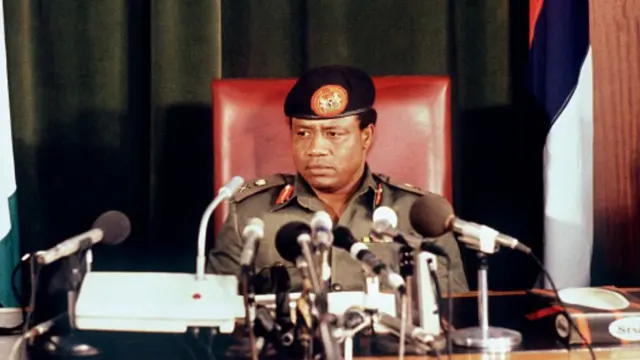
Only in Nigeria would someone so patently incapable rise to the ranks of general, when no serious military would have allowed him to be commissioned. But in Nigeria, due to endless coups and counter-coups, many of which he was involved in, and the purges that followed, Buhari was promoted beyond his intellectual capabilities. This resulted in him becoming the head of the junta that overthrew the civilian regime of President Shehu Shagari in 1983. It didn’t take long for Buhari to waste the goodwill that followed his ascension – he will repeat that trick in 2015. He was overthrown by Ibrahim Babangida in 1985 and the new dictator said then: “When in December 1983, the former military leadership, headed by Major-General Muhammadu Buhari, assumed the reins of government, its accession was heralded in the history of this country. With the nation at the mercy of political misdirection and on the brink of economic collapse, a new sense of hope was created in the minds of every Nigerian.
Beast of no nation