
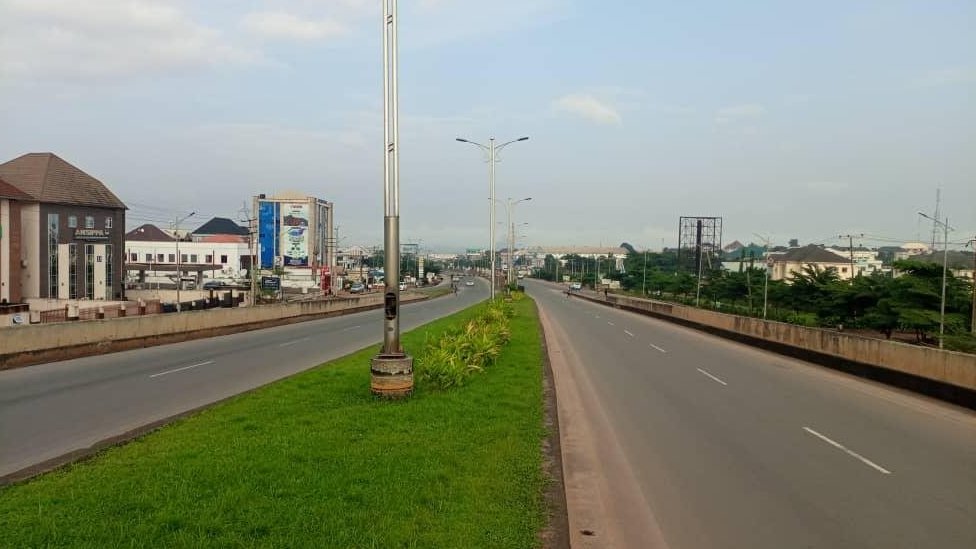
SBM Intelligence, a Nigerian think tank, has today published a detailed study of the economic impact of the “sit at home” protests in southeast Nigeria organised by the separatist Indigenous People of Biafra (IPOB). IPOB were swift in responding to the report. We publish in full below the press statement from SBM and the rebuttal from IPOB so that readers can draw their own conclusions.
Four Years of Disruption: Unmasking the Impact of IPOB’s Sit-at-Home Order in Southeast Nigeria
Since August 2021, IPOB’s “sit-at-home” order in Nigeria’s Southeast has caused severe economic damage ($4.75B loss) and displaced thousands, fuelled by militant violence and government responses.
By August 2025, it will have been four years since the Indigenous People of Biafra (IPOB) introduced its sit-at-home order across Nigeria’s Southeast. Initially intended as a weekly protest demanding the release of its detained leader, Nnamdi Kanu, the action, first observed on 9 August 2021, has since evolved into a recurring and deeply disruptive phenomenon. IPOB, a separatist group seeking the restoration of the defunct Republic of Biafra, draws on decades-old grievances of marginalisation following the Nigerian Civil War. Kanu’s re-arrest in mid-2021 reignited these sentiments, prompting the movement to formalise the Monday shutdowns.
Though the sit-at-home protests began as symbolic acts of civil disobedience, they quickly took on a more coercive character. Compliance was initially high, largely driven by fear and sympathy. However, recent surveys show that only around 29% of residents actively support the directive, with many observing it out of concern for their safety. Violent enforcement by armed actors—often described as “unknown gunmen”—has fuelled a growing atmosphere of insecurity, targeting those who attempt to resume normal activities on designated days.

The economic impact on the region has been severe. Southeastern commercial hubs such as Onitsha and Ariaria have seen near-total shutdowns on Mondays, paralysing local trade and disrupting supply chains across the country. Estimates suggest the region has lost over ₦7.6 trillion within the first two years alone, while the transport sector has reportedly suffered daily losses of up to ₦13 billion at the height of the protests. The education sector has also been badly affected, with students missing crucial classes and national examinations, including WAEC and NECO, further jeopardising long-term human capital development.
Founded in December 2020, the Eastern Security Network (ESN) was set up by IPOB in response to what it described as the Nigerian government’s failure to safeguard the lives and property of Igbo people. According to IPOB, the ESN’s purpose was to protect rural communities from armed groups, including Fulani herdsmen, who were allegedly destroying farmland and endangering lives. However, the group has since been linked to violent clashes with state security forces, often using guerrilla-style attacks on police and military facilities, further escalating the insecurity in the region.

More than 700 people have reportedly been killed in IPOB-related violence between 2021 and 2025. Imo State has seen the highest number of incidents and fatalities, while Ebonyi has recorded the lowest. The government’s heavy-handed response, through military operations like Python Dance and Crocodile Smile, has drawn criticism for alleged rights violations, further straining relations with local communities. A long-term solution will require more than force; it demands structural reforms, meaningful political dialogue, and genuine efforts to rebuild trust in the Southeast.
Download complete report (52 pages)
Today’s full IPOB rejoinder from Comrade Emma Powerful can be found below.
This laughable fabrication alleges that IPOB’s Sit-at-Home actions resulted in 776 deaths and trillions in economic losses. This is not just a lie—it is a desperate concoction by a drowning regime grasping at straws. SBM Intelligence is neither credible nor neutral; it is a mercenary outfit created to launder the image of failed regimes and discredit voices demanding justice and self-determination. Their so-called reports are fit only for the trash can of history, not the pages of reputable journalism.
We challenge SBM Intelligence, Reuters, and Nuhu Ribadu: if you possess an ounce of evidence linking IPOB to these baseless allegations, take it to court. Mazi Nnamdi Kanu is in detention and ready to confront these lies with unassailable truth. Instead of sponsoring international smear campaigns, why not test your fantasy before a judge?
Let it be known and recorded that IPOB officially canceled Monday Sit-at-Home in 2021, and our leader publicly disowned any individual or group enforcing such orders. Therefore, any attack attributed to a “Sit-at-Home” cannot be logically or factually linked to IPOB. This makes the SBM/Reuters report not only false but criminally deceptive.
The timing of this publication is no coincidence. As 30th May Biafra Heroes Day approaches—a sacred day for Biafrans to honour our martyrs—this corrupt regime, through its rented outlets, seeks to deflect attention from its failures and sabotage our remembrance. This is the same Nigeria that could not stop genocidal attacks from Taraba to Zamfara but is fixated on demonizing IPOB, a peaceful movement seeking justice and freedom.
We are not ignorant of history. When Biafra stood alone against the might of the global powers—Communist East, Capitalist West, and Islamic Jihadists from Egypt and across the Arab world—we survived because our cause is righteous and ordained by God. This propaganda blitz is but a whimper compared to the bombs of the 1967–70 genocide. It shall fail too.
Let Reuters know that by allowing itself to be used by Nuhu Ribadu and his gang of discredited Abuja plotters, it has traded its journalistic integrity for blood money. Let SBM Intelligence know they will forever remain irrelevant outside the corridors of Nigerian state-sponsored deceit. Let the Nigerian government know this: No amount of lies, no amount of sponsored reports, no amount of colonial echo chambers will stop the march of Biafra.
On 30th May, the world will see a region stand still in honour of our fallen heroes. We are undeterred, unshaken, and unstoppable. Our allegiance is to the truth, and the truth is that Biafra must come.


