With President Donald Trump riding into the White House on an anti-immigration platform and the likes of Nigel Farage of the Reform Party in the UK making political hay of xenophobic sentiments among voters, you would think it is safe to assume that Nigerian immigrants would broadly be against the bile against migrants that focuses on people like them.
But no, many Nigerians seem to have bought into the rhetoric in one of those “make it make sense” scenarios that would prompt a typical Nigerian to ponder: “no be juju be that?” Several Nigerians on social media are quite comfortable recycling the anti-migrant talking points of politicians like Trump and Farage. This is not surprising as several of them self-identify as “MAGAs”. Trump seems to cut through some Nigerians abroad and back home in ways that no other Western politician has done, with the possible exception of the heady days of Barack Obama’s run for the presidency.
But apart from admiration for Trump and his bluster, Nigerians in the UK in particular seem to have adopted the “pull up the ladder when I get to the top” approach. This is not too dissimilar to the virulent anti-migrant pose struck by Tory Party leader Kemi Badenoch, herself a beneficiary of “birth tourism” – her mother travelled to the UK to give birth to her just for the purposes of securing a British passport.
Kemi Badenoch’s identity crisis: Bad enough for her to seek help
At a Nigerian party in London last night, I struck up a conversation with four Nigerians and they sounded like wannabe Badenochs. One asked why all these immigrants have to come here and they should “stay at home and fix their countries”. Another said if she were in charge, she would deport ever immigrant including herself.
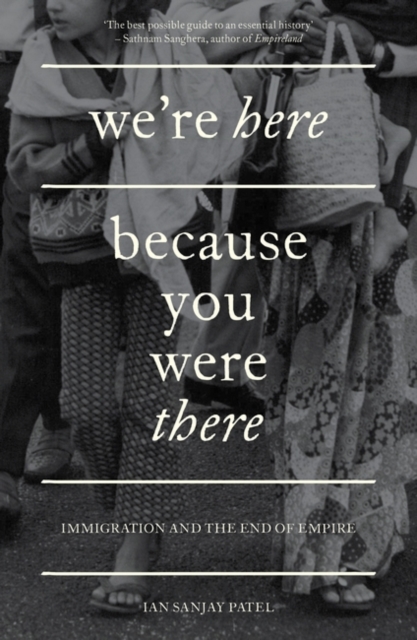
They were not interested in any counter arguments. The fact that most immigrants to the UK are English-speakers, who spoke the language because Britain colonised their country, didn’t fly with those Nigerians. The fact that those Nigerians would have been living in France if they came from Francophone Africa, made little headway. They mentioned Afghan refugees but won’t entertain Britain’s role in making a mess in Afghanistan. No point recommending Ian Sanjay Patel’s book “We’re here because you went there”.
I then asked them why, for example, between Nigeria’s independence in 1960 and the mid-1980s, there were very few Nigerians fleeing (“japa”) the country to settle abroad. I informed them that neoliberal economic policies, that Britain and the West insisted that Nigeria should implement, were primarily responsible for the mass exodus. This was when President Ibrahim Babangida adopted the IMF’s Structural Adjustment Programme. But this wasn’t cutting through. As development economist Ha-Joon Chang wrote: The real cause of African stagnation in the last three decades is free-market policies that the continent has been compelled to implement during the period.
Unfortunately, many Nigerians are only interested in simple answers. Most politicians in the West and the corporate media recognise the effectiveness of simple messaging. As 40 years of neoliberalism have failed to deliver the advertised benefits to Western countries, especially Britain and the US, who have been the main disciples of the gospel of neoliberal fundamentalism, immigrants have served their historical role of being useful scapegoats. All societal ills caused by neoliberal economics from long NHS waiting lists to housing shortages to many struggling to make ends meet, are blamed on migrants. Immigration is then painted as “problem” that needed tackling. This was the backdrop for the Brexit vote in 2016 and a lot of Nigerians in the UK supported Brexit.
The gutter press in the UK have been at the forefront of demonising migrants and no one is spared this carpet-bombing propaganda. The rhetoric is also dangerous as was seen with racist attacks in the UK during riots last summer, fuelled by the media and mainstream politicians. Hostels housing migrants were targeted as were some non-whites.
The Nigerians that buy into the ridiculous claim that Britain is “full” and immigration is a “problem” then need to perform illogical acrobatics in their head to extricate themselves from being a “problem”. They argue that the “problem” is the recent arrivals, or they try to separate the “legal” from the “illegal”. The UN High Commission for Refugees clarified that the term “illegal” is “inaccurate” because: Being undocumented does not constitute a crime in most countries. As it is not an offense against persons, property or national security, it belongs to the realm of administrative law. However, even in countries where violations of immigration law are considered criminal offenses, committing a criminal offense does not make you an ‘illegal’ person.
The term is also harmful because: Calling migrants ‘illegal’ denies their innate dignity and human rights. Characterising migrants’ existence as illegitimate ignores their experiences as workers, women, men, children, families, and the elderly. When dehumanising terms are accepted as the norm, people are turned into targets of contempt, and even their right to life may come under threat.
These nuanced points seem to fly over the heads of Nigerian migrants opposed to immigration. Those Nigerians are also historically illiterate, like the majority in the host nation. They are not aware that anti-immigration is not a recent phenomenon. Every wave of migration to the UK has faced similar dehumanisation, from the Irish fleeing the Potato Famine in the 1800s to Jews fleeing persecution in Eastern Europe in the early 20th century to the “Windrush generation” of migrants from the Caribbean in the 1950s to 1970s.
Anti-immigration may be “good” politics for Trump and Farage, but it is bad economics because immigrants are mainly of working age and trained in their home countries, meaning they contribute more to the economy than they receive in benefits. As Stephen Moore of the Cato Institute said, immigration to the US – a country that was built on forced and voluntary immigration – is “a form of reverse foreign aid. We give less than $20bn in direct aid to third world nations and we get back $30bn a year in capital assets.”
The construction industry has warned the government in the UK that the target of 1.5m new homes in the next five years can’t be met because of a shortage of construction workers. Brexit was a big factor in this shortage as Eastern Europe was a significant source of labour in the industry and the numbers have reduced since the vote in 2016. Government research before the UK left the EU warned of these consequences in construction and several other industries.
Will the Nigerian migrants that oppose migration seek out the truth about how the country desperately needs immigrants like them or stick to comforting lies that blame immigrants for the failures of politicians? This seems very unlikely from the evidence of my discussion last night. As Malcolm X said: “A man who stands for nothing will fall for anything”.