A Nigerian woman failed eight times with her asylum claim in the UK but finally succeeded when she joined the Indigenous People of Biafra (IPOB) and used it as the basis of her claim. This was after a tribunal judge ruled that she became involved with IPOB ‘in order to create a claim for asylum’.
IPOB are involved in sometimes violent agitations for the secession of south-eastern Nigeria from the rest of the country and the formation of a new republic of Biafra. A previous attempt at secession led to a bloody civil war from 1967 to 1970.
The 49 year old woman came to the UK in 2011 and had previous asylum claims rejected. She joined IPOB in 2017 and the separatist group is banned as a terrorist organisation in Nigeria but this ban is not recognised by the UK authorities. She submitted eight different appeals against previous rejections of her asylum claims, ranging from the European Convention of Human Rights Article 8 (which guarantees a right to family life), to claims that she was a victim of trafficking.
As the Labour Party wins in the UK, do pro-Biafrans now have an ally at the heart of govt?
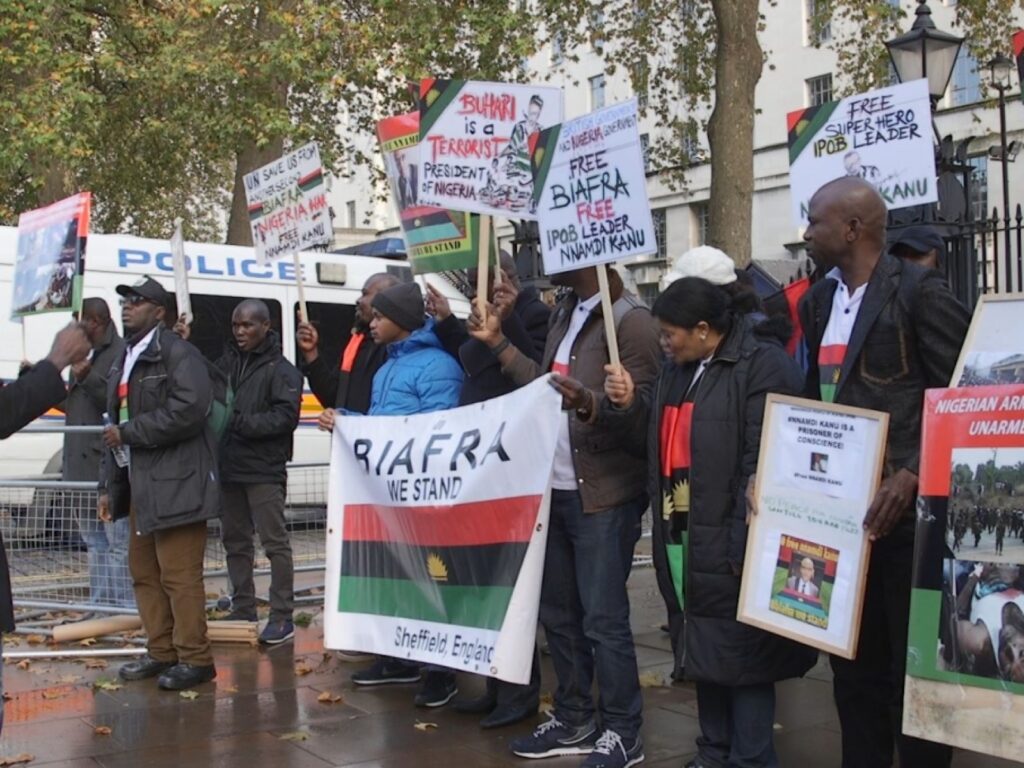
These were all rejected until she claimed that she faced danger if returned to Nigeria because of her membership of IPOB and attending their protests and rallies in Westminster, the seat of the British government. She claimed that their protests at venues such as the Nigerian High Commission at Northumberland Avenue in Westminster were captured on pictures and video by Nigerian security agencies. This meant that she faced persecution if she was sent back to Nigeria.
Her claims were backed by a senior IPOB official with details of her roles in the organisation. There is also widely-reported evidence of the Nigerian authorities killing and torturing IPOB members. The IPOB leader Nnamdi Kanu was arrested in Kenya in 2021 and extradited to Nigeria, where he has remained in detention despite court orders granting him bail.
The Nigerian asylum seeker, who has been granted anonymity to protect her identity, had a lower tribunal judge initially reject her claim because of a lack of evidence of her protest activities and his opinion that she joined IPOB in order to claim asylum.
This was overturned by upper tribunal judge Gemma Loughran on the basis that the woman had a “well-founded fear of persecution” under human rights laws because of her “imputed” political views. The judge ruled that there was a “reasonable likelihood that the woman had been identified as an IPOB activist by the security services in Nigeria and this meant she was at risk if she returned to the country.
Judge Loughran went further: “It is clear from the country background evidence that the security services act arbitrarily and arrest, harm and detain those it believes may be involved with IPOB without conducting an assessment of the extent of their involvement or their motivation. The appeal is allowed on the basis that [she] has a well-founded fear of persecution on account of her imputed political opinion arising from her involvement with IPOB in the UK”.