
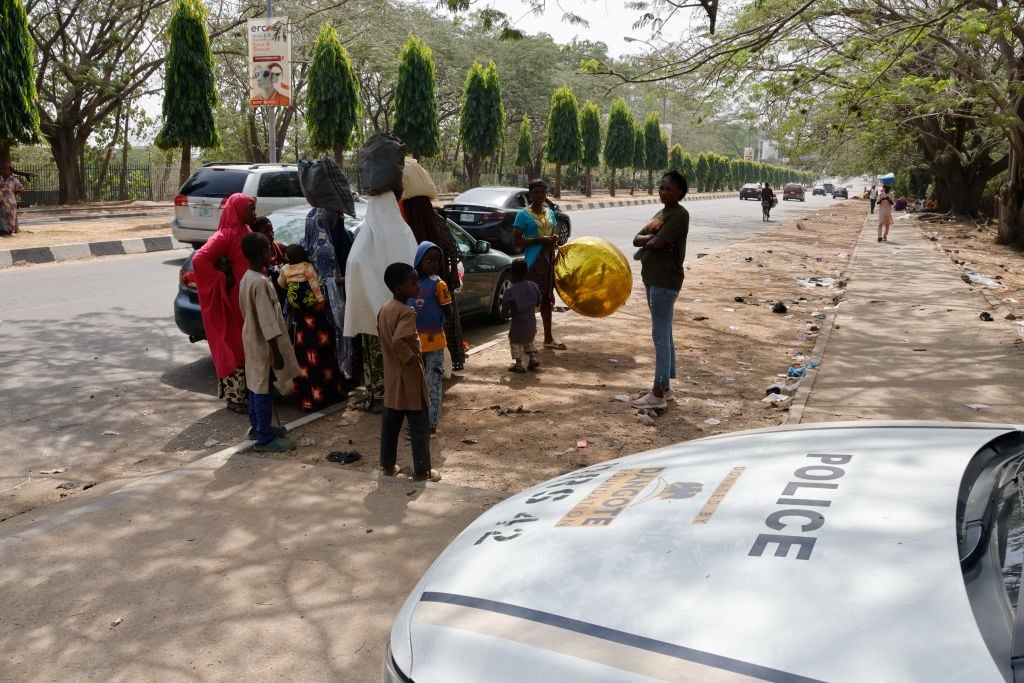
Almajirai (almajiri – singular) are male children that are sent away from home in northern Nigeria ostensibly to study the Quran under the tutelage of a “mallam”. This is similar to the madrassa system in Pakistan, Afghanistan, etc. But the almajirai are usually children of the dirt poor, who can’t afford to look after their children and abandon their parental responsibilities under the guise of Islam.
The children are expected to hustle for food while learning the Quran by rote. Having so many boys roaming the streets of northern towns and cities is a clear and present danger to both the children and wider society. In most of the communal and political violence in the region, the almajirai have been a useful unregulated militia that can be deployed by the powers that be against perceived enemies. They are also recruiting grounds for religious extremists in search of foot soldiers.
Al Jazeera News sent reporter Ali Hashim to Kano to examine the issue. He said thousands of children live on the streets of northern Nigeria’s biggest city and the state government sees them as a security threat. But aid agencies say the children have been failed by those meant to protect them and a system that offers no hope for the future, calling the children “victims of poverty”.
Nigeria’s rulers have failed in their constitutional obligations to those children roaming the streets. Chapter 2, section 14 (2)(b) of the constitutions states that “the security and welfare of the people shall be the primary purpose of government”. Section 17 (3)(f) holds that the state should ensure that “children, young persons and the aged are protected against any exploitation whatsoever, and against moral and material neglect”. Section 18 (3)(a) compels the state to provide “free, compulsory and universal primary education”.
1.5m children are out of school in Kano State. The almajirai have no access to education. The state’s religious police goes out on raids to capture the children and take them to “rehabilitation camps”. But aid agencies feel this doesn’t come close to addressing the root of the problem. Hashim claimed the future for the children is “as uncertain as their next meal”.
Any efforts for a more long-lasting solution should involve a carrot and stick approach along the following lines:
1. Education must be free and compulsory for all Nigerians up to secondary school – age 16. Failure to comply must mean jail terms for parents.
2. Free school meals should be provided for all children under 16 in public schools, subject to a means test.


