
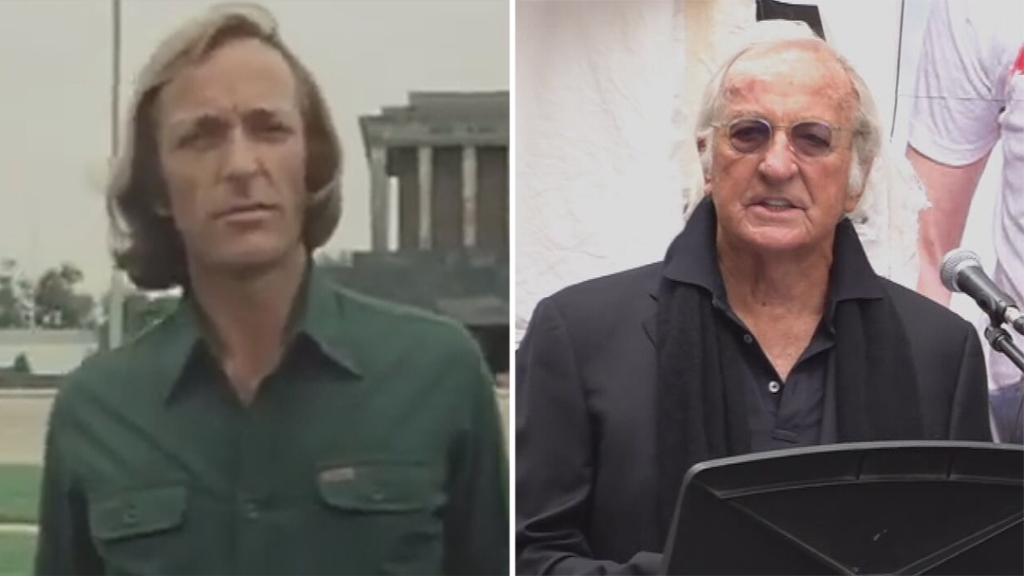
The family of the great journalist, award-winning documentary maker and author John Pilger announced he died on 30 December on Twitter yesterday at the age of 84. He was also a war correspondent for the Daily Mirror in Biafra during the Nigerian Civil War.
It is with great sadness the family of John Pilger announce he died yesterday 30 December 2023 in London aged 84. His journalism and documentaries were celebrated around the world, but to his family he was simply the most amazing and loved Dad, Grandad and partner. Rest In Peace. pic.twitter.com/j90QTAPgzC
— John Pilger (@johnpilger) December 31, 2023
The Australian was an inspiration to many including yours truly for his books and documentaries that told the truth to power. He said on his Twitter strapline: It is not enough for journalists to see themselves as mere messengers without understanding the hidden agendas of the message and the myths that surround it.
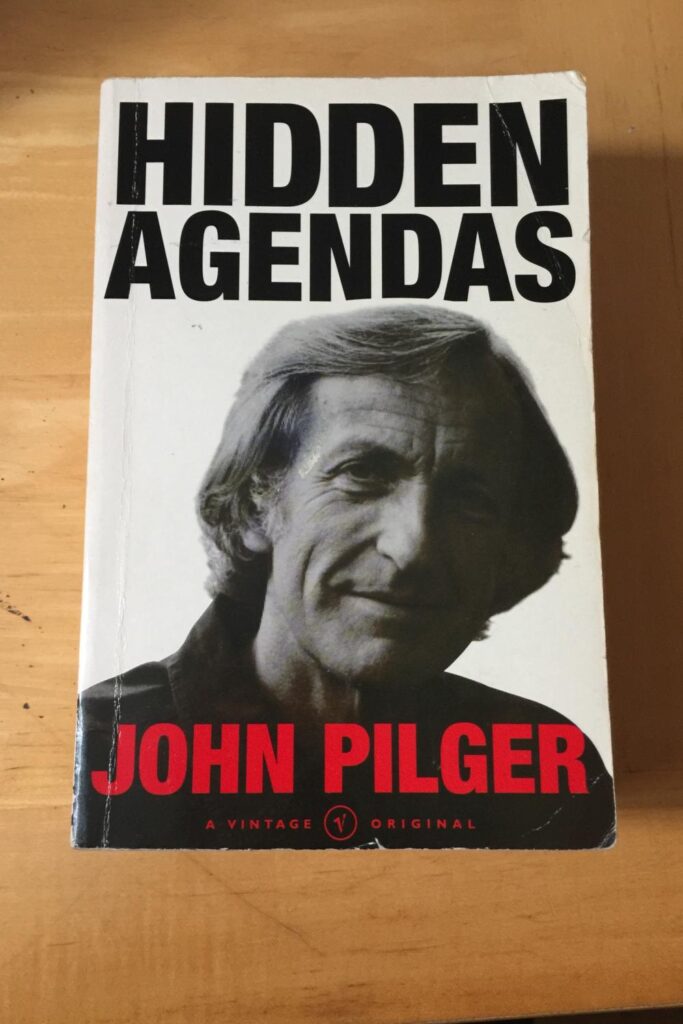
His book “Hidden Agendas”, written in 1998 was described by the Independent as: A moral interpretation of world affairs in a cynical age”. It was a remarkable and detailed exposure of the hypocrisy of countries like the United States and Britain as they spread terror and support tyrants around the world, while posturing about “democracy” and “human rights”.
Nigeria gets several mentions in the book. He wrote in its introduction: The other day I met Rotimi Sankore from Nigeria (it’s not a recognisable name) in a pub in London. A shy and sardonic man in his early 30s, he is part of the resistance to a vicious regime of generals and colonels shored up by Western oil companies. The Lagos magazine he writes for, Tempo, survives in amazing circumstances. His editor-in-chief has spent nine months in prison and the assistant editor, George Mbah, is being held at Biu prison in northern Nigeria, and has suffered head injuries. Three other editors, Chris Anyanwu, Ben Charles Obi and Kunle Ajibade are in prison, and very sick. They were convicted by a secret military tribunal of being ‘accessories after the fact of treason’. Known as the Innocent Four, they were immensely popular with the public for the physical and moral courage they have shown. Each was given a life sentence which, after public outrage, was commuted to 15 years.
‘That’s a lifetime in a Nigerian prison’, said Rotimi Sankore. He described how Tempo still publishes and circulates from a network of safe houses and with printers and vendors willing to risk their freedom, even their lives. ‘It is guerrilla journalism’, he said. ‘We depend on the people for intelligence. When they tell us the soldiers are coming, we are on our way to the next location where the presses are waiting. When a military lorry parks near the vendors, they signal, and other vendors, out of sight, pick up the papers. We are all fugitives; it is a strange life, but a necessary one.’ He was flying home that week. ‘I will keep going until they catch me’, he said. ‘That’s my job: that is what people expect of me.’

This was the life of truth-telling journalists under the murderous and kleptomaniac tyrant Sani Abacha. Things have only improved marginally since.
Pilger started the chapter called “Arming the world” with a quote from the Campaign Against the Arms Trade: The price of one British Aerospace Hawk is roughly the amount needed to provide 1.5m people in the Third World with fresh water for life. He went on to write: Then there is Nigeria. Despite denials by government ministers, Britain continues to supply arms to the military regime, a famous human rights’ abuser, which is waging a war against the Ogoni people.
Later in that chapter Pilger wrote: In the 1960s, the [Harold] Wilson Government, far from promoting human rights around the world, supported the American invasion of Vietnam, sold arms to racist South Africa and armed and conspired with the Nigerian military regime to crush Biafra.
He expanded on how the newspaper he worked for helped cover up British government hypocrisy: On my return from the Biafran War in Nigeria, I wrote that the Wilson Government, as the principal supplier of arms to the military government in Lagos, bore much of the responsibility for the dead and dying Biafran children whose suffering the Mirror had so graphically displayed. Britain, I pointed out, was a major customer for Nigeria’s oil. Lee Howard, the Buddha-shaped editor, a benign man who called people ‘Duckie’, summoned me.
The page-proof of my piece was on his desk. He offered me a Scotch and suggested I was being ‘rather harsh’ on the government’ at a difficult time’. He was sure I would agree to hold over the piece until I had more time to think about it. Still in my 20s, I was in considerable awe of the editor of the Daily Mirror. Assisted by the Scotch, I said I would prefer to choose another form of words there and then so that the piece could run that night.
He no longer looked benign. ‘You have 15 minutes,’ he said, handing me the proof. Outside, I rearranged my criticism of the government to include a sprinkling of vacuous words of sympathy which government ministers had offered the Biafrans. I returned and watched the editor brood over it. No Scotch was offered.
‘Shall we dispense with the reference to oil, Duckie?’ he asked, though more as a statement of invincible authority. I remained silent, watching his fountain pen career across my words.
‘There we are, Duckie…’ He had taken out virtually all mention of the government’s complicity. ‘I’ll tell the sub-editors we’re all agreed…’
Oil probably came under the heading of ‘national interest’ and the Mirror was being protective towards the government on this issue.
Michelle Stanistreet, general secretary of the National Union of Journalists in Britain said in her tribute to Pilger: “John Pilger was a giant of journalism who in his reporting career witnessed momentous historical events such as the assassination of Robert Kennedy and the wars in Vietnam, Cambodia, Bangladesh and Biafra. He was also a pioneer of television as a vehicle for investigative journalism, producing ground-breaking work across the BBC and ITV.
“When I was studying to become a journalist, I pored over John’s collections of writing and columns and he was a guiding star for generations of aspirant reporters. A longstanding NUJ member, he was also the most redoubtable supporter of progressive campaigns creating work that was the embodiment of journalism that managed to be simultaneously, fair, balanced, whilst unequivocally on the side of the underdog. The NUJ pays tribute to his contribution to journalism and sends our collective condolences to John’s family and loved ones.”


