
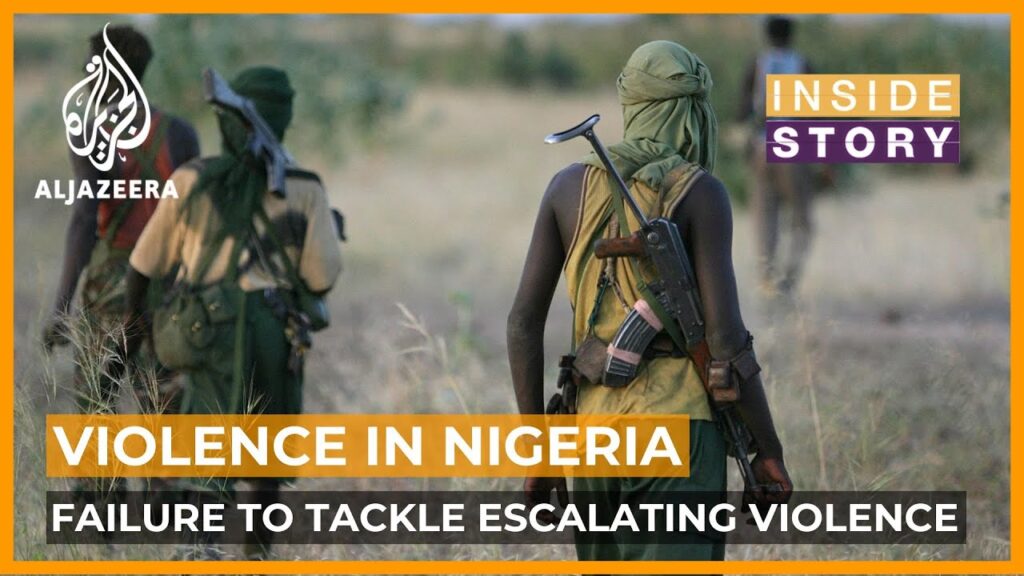
The Al Jazeera programme “Inside Story” attempted yesterday to answer the question of why communities in Nigeria could be subjected to attacks for days without a security response in sight. This followed the attacks on communities in Plateau State on Christmas Eve, Christmas Day and Boxing Day, resulting in about 160 deaths and many more injured. The dead had to be buried in mass graves and Plateau governor Caleb Mutfwang said “enough was enough” very unconvincingly.
Many Nigerians know that enough is never enough and it is only a matter of when not if there will be another attack, with a similar non-response from the people charged with securing lives and property.
The guests on the programme were Musa Ashoms, the Plateau State Information Commissioner, Chris Kwaja from the United States Institute for Peace and Isa Sanusi, Amnesty International country director for Nigeria.
Ashoms could only offer being “saddened” by the attacks, which he said were “well-planned, sponsored and aimed at cleansing the communities”. Sanusi drew attention to the “failure of the authorities to stop the killings and bring the perpetrators to justice”. This has led to a culture of impunity in which the attackers, suspected to be Fulani herdsmen, are encouraged by the fact that they will not be arrested and charged.
Sanusi said the constitutional duty of government was protecting people and property. While Ashoms threw in the old chestnut that security was not decentralised. Kwaja rightly pointed out the “inadequacy of policing personnel and lack of accountability”. There weren’t even enough officers for the population as Nigeria had a ratio of 1 to 600 police officers to citizens.
But the programme failed to address the root causes of what it called “clashes” between herders and farming communities. These are not “clashes”. It is premeditated mass murder and ethnic cleansing. The business of herding cattle by foot is inherently violent because the cows will destroy crops or will be stolen by rustlers. This then leads to reprisal attacks on communities in the vicinity. We highlighted these issues when we called for a beef boycott over two years ago.
The programme also failed to address the key questions around ownership of the cattle, which would then progress logically to who is behind the attacks and why there are usually no security personnel around to prevent the attacks. Former Chief of Army Staff and defence minister Theophilus Danjuma, who comes from neighbouring Taraba State, claimed in March 2018 that the military and police were complicit in the violence.
It was a shame that “Inside Story” used up about 30 minutes without examining the inside story by connecting the dots between a multibillion naira cattle business owned by rich Nigerians, that includes military and police top brass, who most likely stand down their officers whenever villages and communities are in the crosshairs of reprisal attacks.


