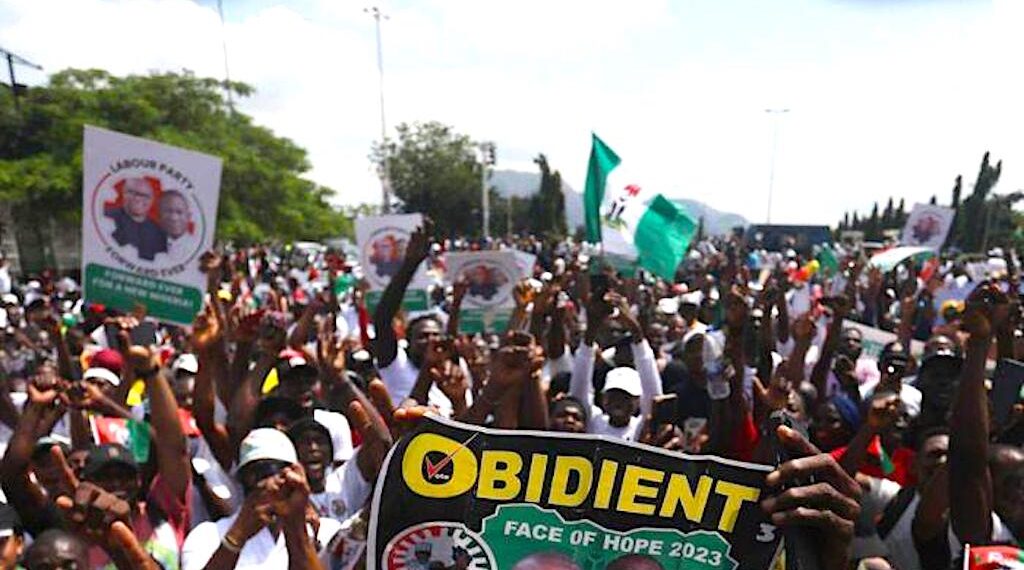
The candidacy of Peter Obi during the last presidential (s)election unleashed a previously-unseen phenomenon in Nigeria in terms of almost messianic support for a candidate. Obi’s largely young and mainly urban base was known as “Obidients” and seemed more like a movement than a political campaign.
For a large majority of them, their man was the solution to all that afflicted Nigeria. Only he had the magic wand and only needed to get his feet behind the presidential desk to “build a new Nigeria”, which “was POssible“. Any arguments to the contrary were not entertained and the more fanatical elements among the Obidients were not shy in going forward on social media in terms of launching vicious verbals against anyone that didn’t buy into Obi’s saintliness. Such behaviour amounted to heresy. Fortunately, not all Obidients are like this, with some willing to hear counter arguments.
I bumped into an old friend, who belongs to the category of more sensible Obidients, last night at my favourite watering hole in London’s east side. After settling down to suya and cold beer, he launched into a catalogue of woes that Nigeria was facing. The man runs a hotel in south-eastern Nigeria and shuttles between there and London. He said business was going downhill as very few had money to spend even on essentials.
I volunteered that things won’t have been different if Obi had won. So he asked me if I thought Obi won the (s)election. I replied that I knew for sure that Bola Tinubu didn’t win and came fourth behind Rabiu Kwankwaso. I wasn’t sure if Obi came first or second because, I really didn’t know how people would have voted in some remote outposts of northern Nigeria, where Obi’s Labour Party were unlikely to have had offices, party agents, and so on.
My guy had no doubts that Obi won and said things would have been different because he knew Obi had the “right intentions” for the country. I responded that I don’t like talking about people’s intentions because I’m not a mind-reader. What I do is look at their record and actions. I said no one with the right intentions for Nigeria would have been willing to be Atiku Abubakar’s running mate in 2018, as Obi did. I gave a couple of examples of Atiku’s corruption and involvement in the cattle business, which involved sponsoring violence against communities that disrupt the business of herding cattle. The Obidient guy dismissed this as having to “sometimes dine with the devil” to achieve your goals as you won’t change Nigeria unless you gain power.
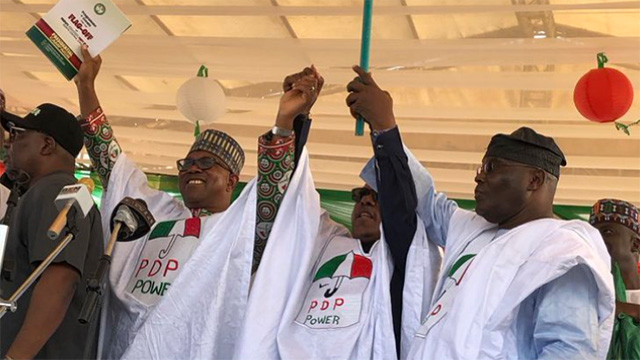
The second point I used to question Obi’s intentions was about anointing Willie Obiano as his successor. I said it was an attempt to do what Tinubu did in Lagos State – use a puppet to control state funds. My guy found this hard to defend but allowed that it was a “mistake” and “we all made mistakes”.
Continuing on the issue of judging people by actions not “intentions”, I reminded him that Obi claimed he will turn Nigeria “from consumption to production”. Why then, I asked, did a wealthy man like him not establish factories, but chose to import Heinz vegetable salad, Ovaltine, etc that didn’t require complex manufacturing processes? My friend, who described himself as a huge stalwart of the Obidient movement, replied that what his hero did as a private individual in the pursuit of profits should have no bearing as he had to operate in an environment created by the government of the day. He added that Obi should be judged on what he did or could do in government to create the environment that encouraged the move from “consumption to production”.
I was like “great, let’s talk about his eight years as governor of Anambra State”. I said Onitsha, the commercial capital of Anambra, had the largest market in Africa. Nnewi was a hub that supplied auto spares across West Africa. There was also Innoson Motors in Nnewi. The Onitsha-Nnewi axis was begging to be transformed from “consumption to production” with government support. My Obidient guy jumped in about how “Obi helped Innoson” by buying cars from the company for traditional rulers and government officials. I said I expected a bit more. A serious governor would have supported the company with grants, invested in R&D at state universities to help support local production at the company. Such production would have transformed supply chains, created well-paying jobs for school leavers and less reliance on scarce foreign currency. I gave the example of how Silicon Valley and the Microsofts of this world were beneficiaries of public funding in R&D by the US government. My Obidient friend struggled to find evidence of Obi, as governor, providing any meaningful aid to SMEs in his state, support for manufacturers like Innoson in terms of fostering their partnerships with research departments at the state university, and so on.

So instead, he moved to how the current governor, Charles Soludo, was making progress using a “blueprint” developed by Obi. I wondered what “blueprint” this was, asking whether building a 2.4bn naira amusement park should have been a priority for the government. My Obidient friend disagreed, claiming the park was necessary to make the state “liveable”, so that “those of us abroad would return”. I said what would make the state “liveable” was security, running water and critical public services, especially emergency services such as fire and rescue and ambulance services. I pointed out that in several major fires in Onitsha market going back to Obi’s time as a governor, billions of naira in goods were destroyed without adequate fire and rescue response, while help only came several hours later from the fire brigade in neighbouring Asaba.
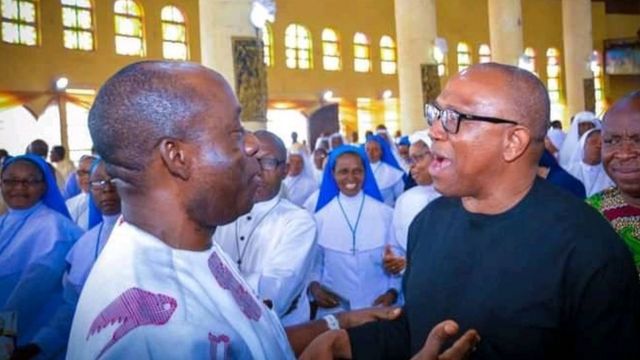
I pointed out that a decent fire and rescue service was an “enabling environment” for businesses as an adequate response means less damage to goods and property. My guy could only respond that Obi “wasn’t perfect”. I then moved to how investment in public education was part of creating an “enabling environment” for business because students are the future business leaders and workforce. I said Obi increased tuition fees in state universities, pricing out the poor and claimed that “education in Anambra was not for the poor”. The reply was that this was news to him and he needed to see evidence of this.
His only point that I didn’t dispute was that Obi inherited a state in a bad situation, with an even more useless governor in Chinwoke Mbadinuju, under whom public schools were shut down in the state for a year. I thought to myself if Obi’s only undisputed achievement was being better than Mbadinuju, then Obidients should stop speculating about his “good intentions”, accept the reality that their man is no different from the rest of Nigerian politicians and after all, “he is not perfect”.