Ngozi Okonjo-Iweala is a darling of many Nigerian social media “warriors” and also the Director-General of the World Trade Organisation (WTO), as well as being a former finance minister and ex economist from the World Bank. That she enjoys so much goodwill from Nigerians is illustrative of how many Nigerians are educated but ignorant, especially of the roles played by the WTO and the World Bank in Nigeria’s underdevelopment.
As the late historian Yusufu Bala Usman put it: Ignorance is not the same as illiteracy. Knowledge is not the same as literacy, or, even the same as the acquisition of educational certificates, or, academic ranks. Some of the most highly literate Nigerians, and the most highly educated, by virtue of their certificates and ranks, are some of the most ignorant over many crucial areas of natural and human existence and over our national life, like our geography, history, economy and politics.
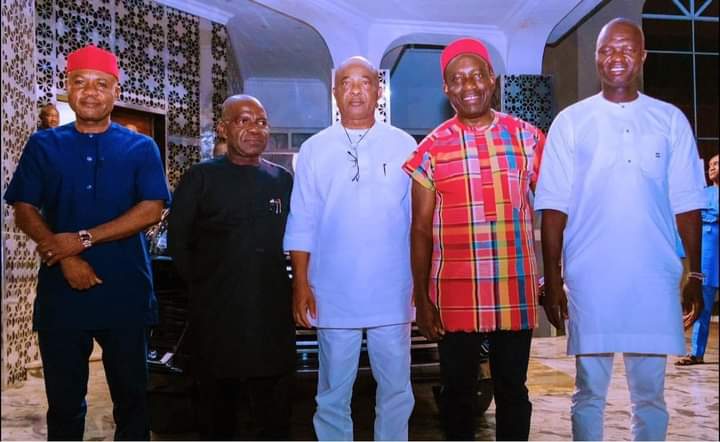
Okonjo-Iweala, with her Ivy League degrees in orthodox economics, served up a lot of ignorance in her address to the “excellencies” at the Southeast economic/security summit in Owerri on Thursday.
She kicked off with the usual banalities and platitudes laced with management consultant speak such as “redynamised” to give such windbaggery a veneer of substance. We were told the biggest challenges in the southeast were “ourselves”, too much “individualism”, no “common purpose”, no “unity”, and so on. This fed off the Igbo saying “Igbo enwe eze” (“Igbos don’t have kings”), which reflects the republican heritage of the people, and is usually trotted out to explain why they don’t always line up behind one self-appointed “leader”.
Okonjo-Iweala was also playing the old trick of spreading the blame so widely and thinly that in effect no one was then to blame for the deplorable conditions in the region. This would have felt like music to the ears of the governors of the five southeastern states present and their predecessors, because it is difficult to imagine any other group more responsible for the mess in the region more than the governors that enrich themselves during their tenures while impoverishing their people. There was hardly a peep about corruption in Okonjo-Iweala’s speech.
She said insecurity was a major problem and hindrance to development. That’s stating the bleeding obvious. But she then said insecurity was “partly” due to “fragmentation”. No, insecurity was due to corruption. Corruption meant that the funds for fighting insecurity are stolen, while the funds for fighting the causes of insecurity are also looted. The governors may want to claim that the security agencies are controlled by the federal government, but they don’t account for how they use the funds in their “security votes”. Transparency International published a report in 2019 that said more is spent per year on “security votes” than the army budget. A little less corruption and more spending of the “security vote” on security in the southeast would go a long way, but Okonjo-Iweala allowed the governors to dodge a bullet by talking about “fragmentation”.
She rightly identified good governance as a way forward, but never adequately described what was entailed. Good governance means ruling in accordance with the constitution, which holds that the security and welfare of Nigerians should be the “primary purpose” of government. Okonjo-Iweala said very little about the welfare of the people and how investment in this by government is part of the good governance agenda and one of the biggest factors in spurring development and growth. She said little about investment in human capital.
She then went into her comfort zone, acting like a bookkeeper, as she spoke about “fiscal performance” and increasing internally generated revenue (IGR). Taxes are an important source for development funding, but left unspoken was tax avoidance by multinationals in Nigeria. As a former World Bank economist and DG at the WTO, Okonjo-Iweala serves the interests of international capital, whose goals include paying as little tax as they can get away with in the countries that they operate in. As Nigeria’s finance minister, she did little to clampdown on avoidance and hardly mentioned it in speeches. At this summit she spoke about the allocation to the states from the federal government. This is almost entirely made up of revenues from oil and gas. If more multinationals paid their taxes, it would mean more funding allocated to the states, which could then be spent on development. She swerved this and focused on IGR, ignoring the reality that more local taxes on ordinary people, means less disposable income for them, which leads to less spending and reduced growth. It is even worse when there’s little guarantee that unaccountable governors that amass huge revenues in IGR will spend it judiciously. As the American colony activist James Otis said in relation to paying taxes to the British crown, “taxation without representation is tyranny”.
Okonjo-Iweala continued with her neoliberal orthodoxy claiming the privatisation of electricity was an “opportunity”. She never bothered to explain how “investors” would get their money back in the sector in a country mired in poverty. She ignored the fact that European countries like France and Germany are extending the nationalisation of their energy sector, as the market has failed to protect consumers from high costs, failed to invest in renewable energy, etc. Also going unmentioned is the reality that in Geneva, where the WTO is headquartered, SIG, the company that supplies electricity, gas and water, is publicly-owned by the city authority and canton of Geneva.
She then called for off-grid solutions in the rural areas, which we have supported in previous articles. Including the one below.
Conspicuous by its absence was how poor rural-dwellers could be able to afford bills from companies with their eyes on the profit margin. She then, as usual, looked abroad for help with off-grid solutions from the Rockefeller Foundation. No mention of support for projects like the one at the University of Nigeria Nsukka which generates energy from waste.
She took her banality up a notch by calling for a southeast “investment summit”. The last thing the region needs is another summit. There was the Oganiru Investment Summit in Enugu in 2016 and an Anambra Investment Summit in Awka earlier this month, to mention but two. All these produced large amounts of hot air and not much else.
Her other ideas were just as shallow – she spoke of creating a Silicon Valley type digital hub and inviting foreign investment in biotech and pharma production. As usual with neoliberal dogma, the critical role of public investment in R&D was ignored. There would no Silicon Valley without US government funding. As technology expert Tom Kalil noted: The government not only incubated research in its various federal agencies and labs, but also served as a stable and deep-pocketed customer for integrated circuits in the early years of the industry when chip technology was new.
The history of Big Pharma is also notable for significant government investment in early stage research. But Okonjo-Iweala, the WTO, the World Bank and other neoliberal fundamentalists expect Nigeria to develop by insisting on less government and cuts in public spending. She blithely mentioned Innoson Motors, but very little about how government support was essential for the development of the auto industry in advanced countries in terms of subsidies, infant industry protection, tariffs, etc.
The rest of her talk about industrial hubs, diaspora bonds, etc kept begging the question why she spent seven years as finance minister/coordinating minister for the economy doing precious little about those issues, leaving Nigeria just as dependent on oil as when she was appointed in 2003.
The stuff about Igbo professors and doctors coming back to develop universities and hospitals was as ridiculous as it gets. Development is not an act of charity. It should be coordinated and funded by the governments in the region and not in a haphazard manner of reliance on the whims of good-hearted individuals. Empty words like calling on individuals to come back and build institutions only serve to divert attention from the “excellencies” in the audience, exempting them tacitly from their constitutional obligations.