Search

The illegality of the arrest and continued detention of Chike Ibezim by the Nigerian police

The Nigeria Police Force public relations officer Olumuyiwa Adejobi held a press conference on Tuesday, parading a suspect, Chike Ibezim, whom they claim was involved in “conspiracy, criminal intimidation, cyber stalking and cyber bullying”.

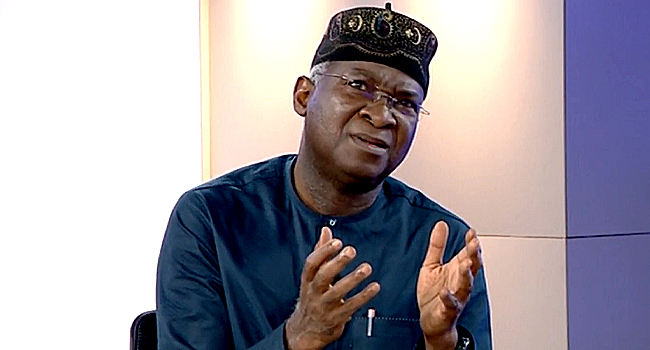
This appeared to be a case of hiding behind the law to silence free speech.  All Chike Ibezim appeared to have been “guilty” of was being the brother of Nnamdi Ibezim, who runs a Reportera Twitter handle that claimed that Babatunde Fashola, the former minister and former Lagos State governor, drafted the judgment of the Presidential Election Petition Tribunal, which on Wednesday dismissed all the petitions challenging the (s)election of Bola Tinubu as president.

The journalist Claud Cockburn once said “never believe anything until it’s been officially denied”. Fashola promptly instructed his solicitors to go after Reportera and its publishers for the allegation about his involvement in the tribunal judgment – which he should be entitled to under libel laws.  Instead of leaving it to the courts to decide whether he was libelled, the former minister engaged in, what Fela Kuti would have called a “power show” by getting the police involved. It was a show of shame.

Firstly, the Nigerian police continues to ignore the rights of suspects by parading them in public.  Secondly, while the Cybercrimes (Prohibition and Prevention Act) of 2015 creates an offence of  “cyber stalking”, it is for the courts not the police to decide whether an offence has been committed.  Section 24 of the Act defines “cyber stalking” as follows:
Any person who knowingly or intentionally sends a message or other matter by means of computer systems or network that -­‐
(a) is grossly offensive, pornographic or of an indecent, obscene or menacing character or causes any such message or matter to be so sent;
or (b) he knows to be false, for the purpose of causing annoyance, inconvenience danger, obstruction, insult, injury, criminal intimidation, enmity, hatred, ill will or needless anxiety to another or causes such a message to be sent:commits an offence under this Act and shall be liable on conviction to a fine of not more than N7,000,000.00 or imprisonment for a term of not more than 3 years or to both such fine and imprisonment.
(2) Any person who knowingly or intentionally transmits or causes the transmission of any communication through a computer system or network -­‐
(a) to bully, threaten or harass another person, where such communication places another person in fear of death, violence or bodily harm or to another person;
b) containing any threat to kidnap any person or any threat to harm the person of another, any demand or request for a ransom for the release of any kidnapped person, to extort from any person, firm, association or corporation, any money or other thing of value; or
(c) containing any threat to harm the property or reputation of the addressee or of another or the reputation of a deceased person or any threat to accuse the addressee or any other person of a crime, to extort from any person, firm, association, or corporation, any money or other thing of value: commits an offence under this Act and shall be liable on conviction-­‐
(i) in the case of paragraphs (a) and (b) of this subsection to imprisonment for a term of 10 years and/or a minimum fine of N25,000,000.00; and
(ii) in the case of paragraph (c) and (d) of this subsection, to imprisonment for a term of 5 years and/or a minimum fine of N15,000,000.00.
(3) A court sentencing or otherwise dealing with a person convicted of an offence under subsections (1) and (2) may also make an order, which may, for the purpose of protecting the victim or victims of the offence, or any other person mentioned in the order, from further conduct which-­‐
(a) amounts to harassment; or
(b) will cause fear of violence, death or bodily harm; prohibit the defendant from doing anything described/specified in the order.
Former power minister in a power show
Nothing in the above provisions gives the police the authority to claim as Adejobi did that the suspect “made a false statement”.  The statement that Fashola drafted the election petition tribunal judgment could be true or false.  The courts, not Fashola or the police, have to decide.  What Adejobi did was a presumption of guilt, just because the complainant is a VIP, and that is turning the law on its head.
The police should certainly not detain Ibezim for 26 days and continue to hold him without a bail hearing.  This is the height of lawlessness from the police and sadly, not surprising.
Facebook
Twitter
LinkedIn
WhatsApp
Telegram

Leave a Reply

Your email address will not be published. Required fields are marked *

Naijiant in Pictures
Today’s Tune

Quote of the Day

16 August 2026

When you worship power, compassion will look like a sin.

Benjamin Cremer
 
Image


Blast from the Past

What lies behind us and what lies ahead of us are tiny matters compared to what lives within us.
Henry David Thoreau
Random Quote