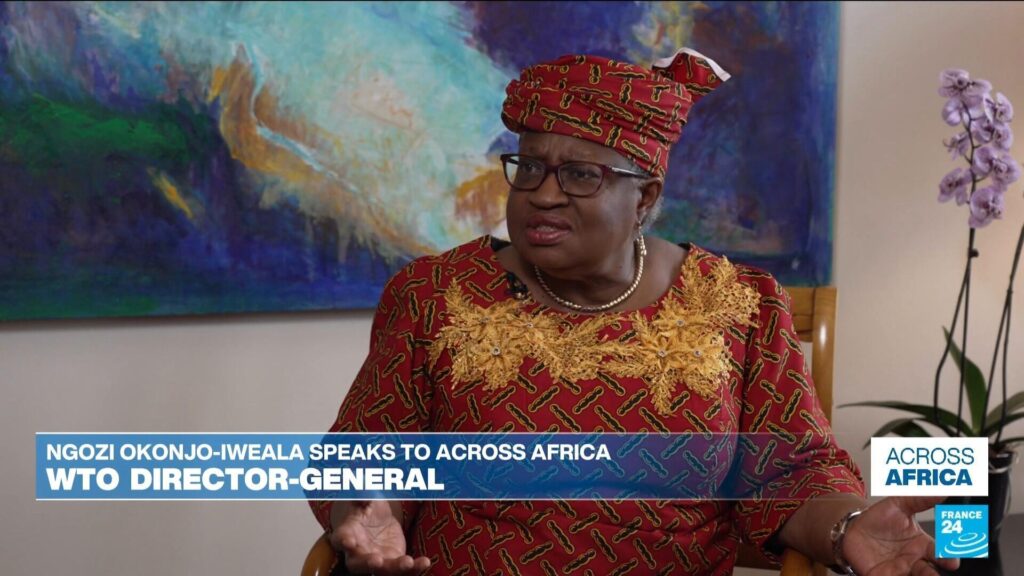
Ngozi Okonjo-Iweala, the head of the World Trade Organisation (WTO), spoke to France 24 last week and did what she does best – peddle the sort of policies that guarantee underdevelopment in Africa.
She told interviewer Georja Calvin-Smith that having an African like her at the top of the food chain at the WTO meant she could “heighten perceptions of what doesn’t work for Africa” at the organisation. Instead of heightening those perceptions during the interview, she was advocating what doesn’t work.
She kicked off by quite rightly saying that most African countries export primary commodities and should focus on adding value to those commodities via manufacturing. She then said the WTO didn’t want to see protectionism.
How exactly could African manufacturers grow without protectionism? Journalist and activist George Monbiot wrote: Almost every rich nation has industrialised with the help of one of two mechanisms now prohibited by the global trade rules [pushed by the WTO]. The first is “infant industry protection”: defending new industries from foreign competition until they are big enough to compete on equal terms. The second is the theft of intellectual property. History suggests that technological development may be impossible without one or both.
Surely an Ivy League trained economist like Okonjo-Iweala must know this and see the link between protectionism and growing local industrial capacity. But she serves an agenda and an organisation dedicated to ensuring Africa doesn’t industrialise and develop. Monbiot explains further: The World Trade Organisation is a corrupted, co-opted, captured institution…..
Monbiot also argued: The three nations which have developed most spectacularly over the past 60 years – Japan, Taiwan and South Korea – all did so not through free trade but through land reform, the protection and funding of key industries and the active promotion of exports by the state. All these nations imposed strict controls on foreign companies seeking to establish factories. Their governments invested massively in infrastructure, research and education. In South Korea and Taiwan, the state owned all the major commercial banks, which permitted it to make the major decisions about investment. In Japan, the Ministry of International Trade and Industry exercised the same control by legal means. They used tariffs and a number of clever legal ruses to shut out foreign products which threatened the development of their new industries. They granted major subsidies for exports. They did, in other words, everything that the World Trade Organisation, the World Bank and the IMF forbid or discourage today.
Korean development economist Ha-Joon Chang wrote in the bestseller “23 things they don’t tell you about capitalism”: The developing countries need a more permissive regime regarding the use of protectionism, regulation of foreign investment and intellectual property right, among others. Those polices that rich countries actually used when they were developing countries themselves. All this requires a reform of the WTO…
As Okonjo-Iweala’s organisation contributes to African underdevelopment, she continued to chant the mantra of “outside investors” as the route to progress. Chang dismissed this approach: Virtually all of today’s rich countries used protectionism and subsidies to promote infant industries. Many of them (especially Japan, Finland and Korea) also severely restricted foreign investment. Between the 1930s and the 1980s, Finland used to classify all enterprises with more than 20% foreign ownership officially as ‘dangerous enterprises’.
It should be clear to even the economically illiterate that Okonjo-Iweala poses a dangerous threat to African progress.