Nigeria’s population is growing at an exponential rate. Harnessing the potential of the young is possible if the right measures are taken, experts say. Otherwise, the country’s problems could grow more intractable.
Sani Umaru, a resident of Makoko, a large slum near Lagos, Nigeria’s most populous city, has three wives and 18 children. “Having a large family is a blessing from God. I am a product of a large family. I like a large family. As a youth, I decided that, when I was older, I would have a large family,” Umaru told DW.
According to UN estimates, Nigeria’s total population will double from currently 200 million to more than 401 million by the end of 2050. If the trend isn’t stopped, Nigeria’s population will exceed 728 million by 2100.
Michael Ayamga, the director of the West Africa Centre for Sustainable Rural Transformation, said Nigeria would need to take urgent preventive measures.
“We also need to start intensifying some birth control education,” he said, emphasizing that growth in itself wasn’t bad, but “we need to manage and be able to control the rate at which it goes.”
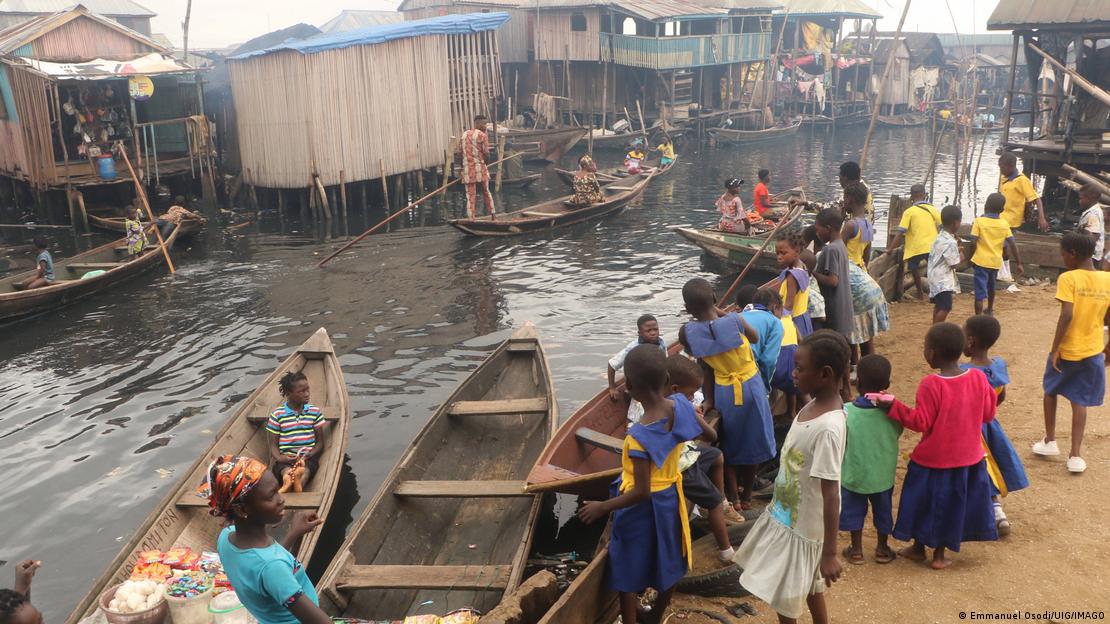
Image: Emmanuel Osodi/UIG/IMAGO
Nigeria’s fertility rate stands at 5.1 children per woman. The global rate is 2.4 births.
The challenges of a growing population
According to UNICEF, Nigeria has a population of more than 65 million people aged 10-24.
“These young people will grow up and enter into what we call the reproductive age,” John Oyefara, a professor of demography at the University of Lagos, told DW, causing the population to grow even further.
Oyefara said population growth could be an asset for Nigeria, but he warned that “we are not doing what we need to do to tap into these potentials, and we have not even started yet.”
Citizens such as Joseph Blabo say they are aware of the problem and the need to do something about it. “Growing up watching the situation of the country, how the economy gets worse by the day, I think that I really made a good decision not wanting to have too many children,” Blabo told DW. He said it was hard to care for many children at the same time and ensure their future.
“The resources available are unable to meet the basic needs of the growing population,” Oyefara said. “This has resulted in inadequate facilities in our health sector, food security, housing, transportation and even employment.”
According to the World Bank, unemployment in Nigeria grew from 6.4% in 2010 to 33.3% at the end of 2020. Estimates point to an employment rate of more than 40% in 2023. The situation is especially dire for the young.
Human capital
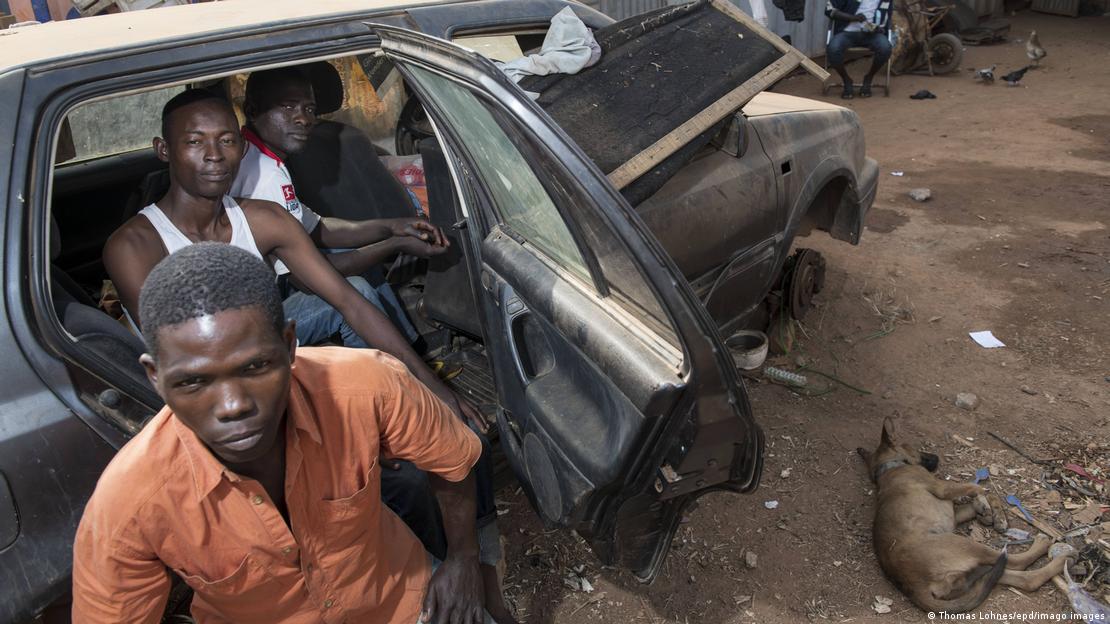
Image: Thomas Lohnes/epd/imago images
“They now turn out to be available hands to be recruited by terrorists and bandits,” Oyefara said.
Oyefara added that curbing population growth would be impossible. The only option was to properly manage the situation. Otherwise, “there will be more crises, insurgency, poverty and insecurity,” he said.
Ayamga was more optimistic about the future, provided some conditions are met. He pointed to China and India as countries that bet on educating the population, and called on Africa to do the same.
“Focus must be on reorienting our educational curricula and changing our educational system to provide relevant training for the future,” he said.
Nigeria needed to follow the example of China and India and create an environment that allows its young to prosper.
“India and China developed the capacity of the young people in IT and in other areas that have to do with technology,” AQyamga said. “Then they started to outsource these competences to other jurisdictions that needed them. This is exactly what needs to start happening: You have to turn the population into human capital.”
By Mimi Mefo Takambou. This piece first appeared on DW Africa.