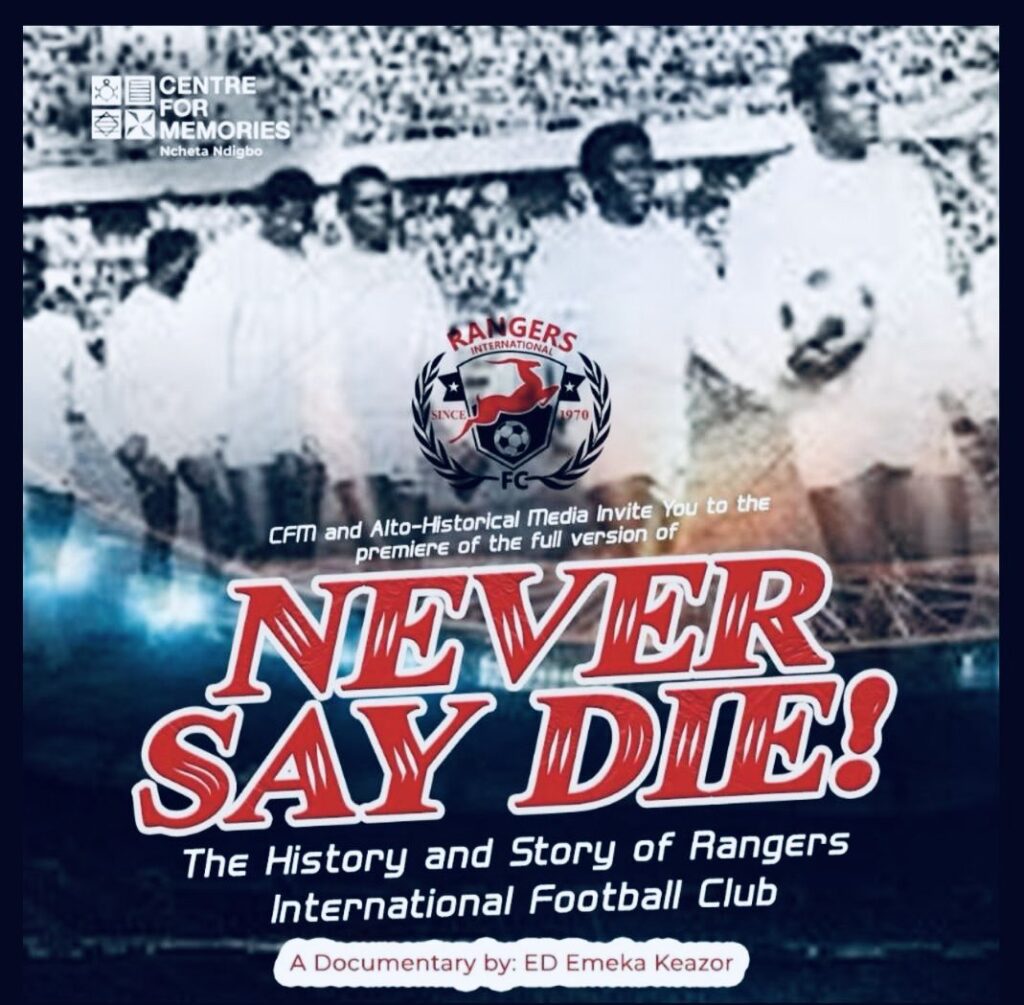
Disruptors are all the rage now with Donald Trump and his billionaire backer Elon Musk taking their game-changing approach to governance in the US. 55 years ago, the formation of Enugu Rangers after the Nigerian civil war was a disruptive game-changer in the words of Ed Keazor, the lawyer, historian and documentary maker who decided to chronicle the explosive story of arguably Nigeria’s greatest club in the documentary “Never Say Die, which premiered in London and Enugu yesterday.
The London leg of the event was at The Africa Centre in Southwark, South London and joining the Rangers fans at the showing were legendary goalie Emmanuel “Man Mountain” Okala via Zoom from his residence in Enugu and Charles Okonkwo, the workaholic striker for the club in the mid-1980s, who is now resident in the UK.
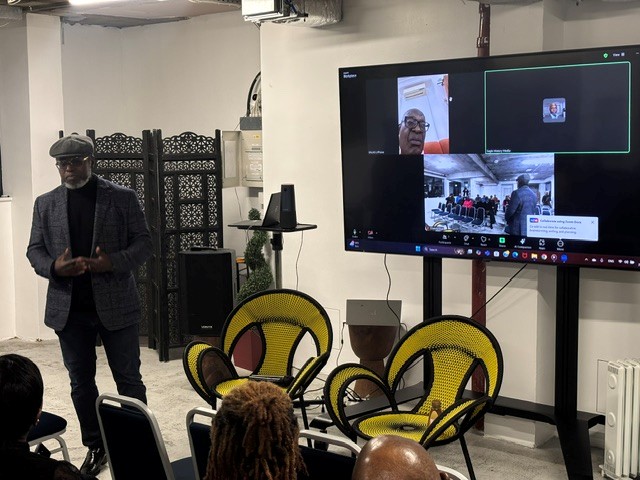
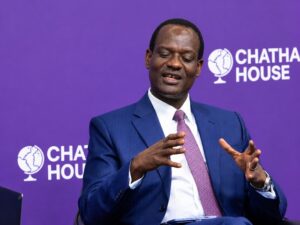
Ed Keazor addresses the audience in London
The Enugu showing was at the Centre for Memories in Independence Layout with the Enugu State deputy governor, Ifeanyi Ossai, informing those present about how the club was significant in raising the hopes of the people of southeast Nigeria, traumatised following defeat in a very bloody civil war in 1970. Ossai pleaded with the people of the region to emulate the selfless sacrifices made by Rangers players especially in those early years following the war.

The premiere in Enugu
The Rangers story, which Keazor called a “labour love”, can’t be fully understood without the backdrop of the horrors of that war. Keazor’s documentary negotiates this aspect in a sensitive way with contributions from Rangers and Nigeria’s most inspirational skipper “Chairman” Christian Chukwu. Chukwu spoke about how he served in the Biafran airforce and was just “happy to survive” the war. We learnt from the documentary that while the whole of Nigeria called Chukwu “Chairman” because of the way he ran the game from centreback, Rangers players reserved the “chairman” title for Okala, and Chukwu was known as “skipper”.
Keazor talks about Rangers and its “revolutionary” spirit
The film used contributions from ex-players such as Sam Onyeaka, Ben Ugwu, Okala and Okonkwo to capture the spirit of what the Rangers shirt meant for the players. Onyeaka, especially regaled viewers with many interesting titbits. But the star of the show was Julie Alale, the late “Madam Rangers”. Her contributions alone were worth the ticket price for the film.

Former Rangers striker Charles Okonkwo speaking during the Q&A session at the event in London with Okala in the background
Alale spoke about how she worked at a rehabilitation centre during the war, how the players asked for her to become the team’s chief welfare officer, the days when there was no money to pay the players and they got food instead, her encounter with Ugandan dictator Idi Amin during a Rangers continental tie. She had the audience in stitches on several occasions.
The formidable Madam Rangers in her heydays
Many Nigerian football fans would wonder how a team that literally rose from the ashes of a civil war could go on and dominate the domestic game. What was their secret? Onyeaka said it was down to “hard training and road work”. Other contributors put it down a “them against us” mentality that led to the “never say die” spirit.
Amobi Ezeaku, who has helped bring back the glory days following a three decade dry spell for the club which culminated in a league title in 2016 with Ezeaku as team manager and another league trophy last season with him now general manager, said the “never say die” attitude was passed down to each new generation of players. This makes them “want to die for the club because of its history”.
Enugu Rangers back on top of Nigerian football where they belong
While fighting spirit and hard work in training contributed to success, the financial muscle from the state government was also significant. This meant funds budgeted for the team found its way to the players. Credit for this was given to Jim Nwobodo, who followed up his stint as club chairman in the late 1970s with the governorship from 1979 to 1983, and the current governor Peter Mbah.
The film captured the essence of what the club means to the people of the region. It echoes what FC Barcelona means to the Spanish region of Catalonia and why the Spanish club’s motto is “mes que un club” (more than a club”. Rangers means more than just football. It has become part of the DNA of a people defeated on the battlefield but refused to be beaten on the football field.